Guest Essays

Let’s change stupid bird names.

Tuesday, August 24th, 2010

A second “guest essay” comes to us from Bob Grump. It’s ironic that Bob’s essay is about stupid names. His own name is, well, let’s just say…hard to buy. That’s okay. Sometimes writers use pen names. We don’t mind. Once again Bob Grump makes good points, as he did in “What the hell is a hectare.”  After his essay, we might weigh in with an opinion of our own about what he says here, if you want to read that far. You may not agree with the guy, but he’s interesting…

By Bob Grump

Okay, Mr. Two-Fisted Birdwatcher, I’ve got a suggestion for you and your readers out there.

I think you’ll like it, because I’ve seen that on your website you often grouse about birds having stupid names. No pun intended.

By the way, ever notice how people say “no pun intended?” That’s bullshit. It’s always intended.

So, here’s my idea:

Start a groundswell movement…get your readers to suggest better names for birds. Not all bird names, just the stupid ones.

"...a dick what?"

"...a dick what?"

Come on, two-fisted birdwatchers, does anybody really want to see a Peewee? How about a Hudsonian Godwit. Can you say Hudsonian Godwit with a straight face?

The Indigo Bunting sounds like something in your grandma’s knitting basket. Can you tell your girlfriend you saw a Yellow-Breasted Chat, or a Dickcissel? Dick what?

I think you mentioned these names in your blog. That’s why I bring them up again. I figure you’re gonna support me because you’re already on my side.

I KNOW you recently wrote that a Green Heron isn’t green, and a Great Blue Heron isn’t blue…and a Great Crested Flycatcher isn’t crested. Or great. We’re on the same page, right?

You, and other regular folks who are interested in birds, have been saddled with using stupid names that have been passed down to us from bird namers who were cuckoo.

Hey, that’s another one. Cuckoo. Yellow-billed, Black-billed…the clock.

Okay, what do we do about it?

Trust the people, that’s what I say. They have a way of righting things. Just give ‘em time, and a voice. Ask your readers to pick a bird name that bugs them. Let ‘em write in with their idea for a better name.

"Bark Hammer?"

"Bark Hammer?"

Say somebody doesn’t like “Yellow-bellied Sapsucker.” So they suggest another name. Like, for example, “bark hammer.” That’s one I kinda like.

Somebody else (maybe you, right?) says they don’t like “Bald Eagle,” because (as you also pointed out in one of your stories) this eagle ain’t bald. Maybe the person says we should call it a “fierce fish-eater” instead. Personally, I’m not wild about that one. But run it up the flagpole and see who salutes.

So that’s my idea. Have people get caught up in this thing. Let’s see what happens. It’s about time, you know. And it’s something we can do something about.

We can’t do much about the collapse of the economy, military unthinkables, kids squawking in restaurants, new human and computer viruses, all the crap that’s coming down the pike every day…but we can do something about stupid bird names!

Spread the word!

Sincerely,

Bob Grump

Bob wants us to spread the word. Okay, if you’ve got any bird names that you could improve, let us know. If there’s enough interest, maybe we’ll make a another contest out of it. Like our “hidden bird” contest. And the best name wins a prize. Or maybe we’ll invite everyone to vote for a winner. Might even send winning ideas to the American Ornithologists’ Union and get the bird officially re-named. Well, let’s not get ahead of ourselves. Maybe this will go nowhere. If that happens, all we can say is: Sorry Bob Grump, whoever you are.

sabrina

Share and Enjoy:
  • Print
  • Digg
  • Sphinn
  • del.icio.us
  • Facebook
  • Mixx
  • Google Bookmarks

Southern Illinois Strikes Again.

Tuesday, July 6th, 2010

Greg Neise has sent us a birding adventure. Actually, a misadventure. Thought we’d share it. Greg’s a guy who’s explored the uncharted Amazon. Illinois should be tame by comparison. But nothing’s tame when the gods of birding conspire to trip you up. For more birding adventure, information, links and other cool stuff that birders at every stage of the game need to know, check out the web forums that Greg has created. Locally, there’s Illinois Birders’ Forum, and nationally, the new North American Birders’Forum. Meanwhile, here’s a recent adventure….

“Southern Illinois Strikes Again.”

By Greg Neise

I think that Southern Illinois has its own pantheon of renegade birding gods, that somehow I have blasphemed. Maybe it was my impertinence in my quest for a Swainson’s Warbler, which no one living north of I-70 is allowed to see.

Maybe it was the great string of luck that my pal Skrentny and I had, right under their noses, last year. I don’t know…but whatever it was, I do know that I pissed them off. Royally.

Randy Shonkwiler and I set out from Berwyn, Illinois this morning at 3:30 am. Or we would have if my alarm had gone off. That should have been a clue that something was amiss, and a higher power was $*#&-ing with me.

Randy called, sitting in his car at 3:45, waking me up and initiating the fastest S-S-S ever recorded. Ever. Recorded.

Late, but not too late, we headed onto I-55 for the long haul down to the St. Louis area where we had a small laundry list of goals for the day: White Ibis (state bird for both of us), Scissor-tailed Flycatcher (state bird for Randy, year bird for me), Western Kingbird (life bird for Randy), Least Tern (life bird for Randy, year bird for me)…and maybe a Black Vulture (lifer for Randy), if they’re hanging out south of Kidd Lake.

As we were hurtling southbound, approximately 130 miles south of Chicago, Randy glanced down at his instrument panel.

“Huh… the battery light just came on”

Limnothlypis, chief of the Southern Illinois birding gods, smiled from her perch at the top of a huge dead bald cypress.

I checked the owner’s manual to see what, exactly, the battery-check light meant. As with all warning lights on the control panels of American cars, this one was pretty specific: it either meant the battery was dead, a belt was messed up or there was a Cracker Barrel 30 miles ahead on the right.

The car seemed to be doing just fine despite this warning, so we pushed on, vowing to make a stop at a service station to check it out when we got to the St. Louis area.

Limnothlypis laughed aloud and instructed one of her lesser gods, Ciris, to take action.

Suddenly the entire instrument panel (except for the passenger-side air bag light…??) went dead. The speedometer, which a second ago was teetering just a hair over 65mph, read zero. We had no fuel. The engine was revving at zero RMP and was cold as a stone.

“Huh… the dashboard just died”

Limnothlypis cackled and screamed, doubling over with laughter, and kicked a Fish Crow…just because.

We pulled off at Business 55 in Lincoln and looked for a service station. At 6:35am. On the Saturday before the 4th of July. Limnothlypis howled in delight and bitch-slapped a Barn Owl.

We found a gas station, and the friendly people there told us that there was a repair shop just 3 storefronts up the road that would be open at 8am. We waited, and at 8am, no one showed up. By 8:30, no one had shown up. We gave up.

It was at this point that I had an epiphany: WINKS!

Here we are, stranded with a dead car in central Illinois, and one of our own non-southern Illinois birding brethren just happens to be of the Winks Shell family at I-55 and Market St. in Bloomington (one of the last true full-service stations left in North America…if you’re passing through, stop, get some gas and say hi).

I called. He answered. “Hey, where you at?” I asked.

“Working…driving the tow truck”, came the reply.

GENIUS!!! We were saved! Matthew was coming to get our asses. Hallelujah.

Limnothlypis wrinkled her rusty brow. She didn’t see this coming. Hmmm…time to put Ciris back to work, and maybe send another of her minions, Eudocimus, along for backup. Ciris is reliable enough, but he’s all show sometimes, without a lot of follow-through.

An hour later we are at Winks Shell, smiling and having a great time shooting the breeze with our birding pal while Randy’s trusty Malibu gets a new alternator. We would be out of here in an hour and off to see our birds.

After about an hour, the mechanic (Matthew’s brother, John) and Matt confer. Like a doctor approaching the family after a routine hang-nail removal results in death, Matthew approaches us:

“Bad news, guys…we can’t get you a new alternator until Tuesday or Wednesday at the earliest.”

Limnothlypis erupts in delight, toppling out of her perch at the top of the dead cypress tree (a state champion) and lands in the swamp, flattening the first Illinois record of a Limpkin.

Okay…time to wrap this up: we wound up driving back to Chicago, sans alternator, and just managed to limp home. About 15 minutes into the drive, my phone rings: it’s Jim Malone.
"See ya next time..."

"See ya next time..."

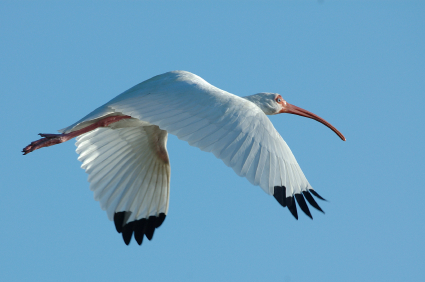
“Hey where are you guys? We got the white Ibis, and there are two dark Ibis as well…one of them’s a Glossy”.

“AAAARRRRGGGGHHH!!!!!!” (Another state bird for both of us)

Limnothlypis rolled about in the swamp, kicking her legs in the air with unbridled joy—almost taking out an Anhinga—and she screamed to the sky:

“Y’all come back soon now, y’hear??!!??”

I’m shooting for Wednesday.

Epitaph: Randy did get a year bird: a Eurasian Collared Dove in Lincoln.

Note: For those unfamiliar with Greg’s birding gods, it might be useful to know that Limnothlypis is part of the Latin scientific fancy name for Swainson’s Warbler. Eudocimus? Same thing, but for the White Ibis. Ciris? Ask Greg where he got that one. Don’t think Painted Buntings could be involved, but who knows.

–TFBW

Share and Enjoy:
  • Print
  • Digg
  • Sphinn
  • del.icio.us
  • Facebook
  • Mixx
  • Google Bookmarks

Deadly Salt

Monday, June 14th, 2010

By Scott H.

Scott is a two-fisted guy in New Mexico who commented about our Daily Sighting, “Bear Pressure.” He also turned us on to a website about the Gulf oil spill. See “Bears, and oil in your neighborhood.” But there’s more to Scott than bears and oil. He wrote the following piece about a little known ecological eye-opener. If you’d like additional information, use the comment box and we’ll relay your message to Scott.

The mess in the Gulf is dramatic and criminal, no one should doubt that, but there is another, ongoing bird-killing ecological train wreck that can be found in several localities out here ‘west of the hundredth.’ This is a situation that has gone on, day after day, year after year, ever since our industrial culture reached the High Plains.

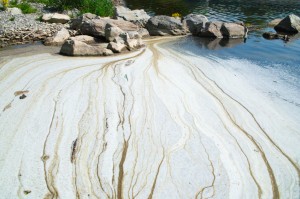
The birds involved are migratory waterfowl and the killer is salt. Not so much the natural levels of salt found in isolated water bodies all around the West, but the evaporative concentrated brines that are discharged from various industrial processes, notably potash refining and petroleum extraction. These are crack-your-skin brines, fluids so concentrated that a film of crystalline salt forms on the surface on hot days. One hesitates to use the word water in association with these basins. You wear a broad brimmed hat when you work on these lakes and heavy waterproof gloves. You put sunscreen under your chin and eyebrows because the floor of these lakes is solid salt, feet thick, whiter than bleached bone and ragged with sharp salt crystals. The reflected sunlight will give you a nasty burn without protection.

iStock_000013102362Small

Migrating waterfowl, mostly ducks and grebes, that loiter on these waters for more than a few tens of minutes are doomed. There’s no water to drink after their long flight. The salt penetrates the oil on their feathers and they begin to suffer from hypothermia. They become waterlogged and begin to ride low in the water, become too heavy to escape and soon exhaust themselves trying. They die, badly, in less than a day and sink to the bottom where they become crystalline caricatures of themselves, or they wash up onto the shore where the scavengers only sample them and leave. The bodies are too salty even for the likes of rats and skunks.

In my experience natural salt lakes don’t kill birds. Only lakes whose normal hydrologic cycles and salt loads have been disrupted become killers. Here in New Mexico these lakes are concentrated in the southeast part of the state, down in the Carlsbad Potash District and the geographically overlapping Permian Basin oil fields, but there are isolated systems of these little known killing fields stretching from New Mexico to Manitoba. They sit there out on the High Plains, largely out of sight and out of mind, luring exhausted waterfowl to their deaths in their thousands, year after year, decade after decade.

There has been some progress. As a result of work done in the early 1990s by several intrepid biologists from the US Fish and Wildlife Service, some of the offending water bodies have been cleaned up or hydrologically altered such that the bird ‘take’ has been reduced or eliminated. Too, companies began early on, under pressure, to try to haze birds landing on some of these lakes to drive them off. These efforts continue to this day on some lakes despite the continual destruction of airboats and other equipment by the corrosive action of the salt.

No one knows the exact toll on migrating populations of ducks in New Mexico, let alone nation wide, but across the High Plains the tally must reach into the thousands annually, perhaps higher.

I have years of experience with this situation as well as other issues involving more conventional playa lakes and would be happy to help educate this website’s readers about a little known aspect of our nation’s biological endowment – and sometimes tragedy. I have access to documents, raw data and people. And, being recently retired, I have time to pontificate.

This has been two-fisted work at its smelliest, grimiest best – or worst – depending on your perspective.

Share and Enjoy:
  • Print
  • Digg
  • Sphinn
  • del.icio.us
  • Facebook
  • Mixx
  • Google Bookmarks

Birds of Literature

Friday, June 11th, 2010

By Marc Davis

Another guest essay comes to us from Marc Davis, a two-fisted ex-newspaper reporter (among other things), and a guy who probably has read any book you’ve read and seen every movie you’ve seen. He knows a few things about classic bird poems, too.

World literature from contemporary times to before antiquity is replete with many a bird, real and imaginary.  In Biblical times there was Noah’s famous dove, the winged creature he sent in search of dry land when the deluge had subsided and the rainbow appeared.  The dove returned to the ark with an olive branch, signifying that the flood waters had retreated and the world with its people, beasts and birds could begin anew.

Then there is the legendary Blue Bird of Happiness that lives in your backyard.  There’s no need for two-fisted birdwatchers to hunt for it everywhere around the globe except at home, where it resides awaiting your greeting and ready to bestow upon you its namesake gift.

As the opposite of the happy bird cited above, there is a dark and accursed bird, also the object of an international quest.  Boundless avarice, betrayal and murder were inspired in those who sought it: The Maltese Falcon. Gutman, the fat man, tells us why the bird was so avidly hunted in Dashiell Hammett’s tale of the same title.  Gutman tells P.I. Sam Spade that the bird, made of pure gold and encrusted with precious jewels, was the loot and plunder of the Levant, stolen by the Knights of Malta and paid in tribute to the King of Spain, the Emperor, Charles the Fifth.  Greed undid all who pursued it.

"Nevermore..."
“Nevermore…”

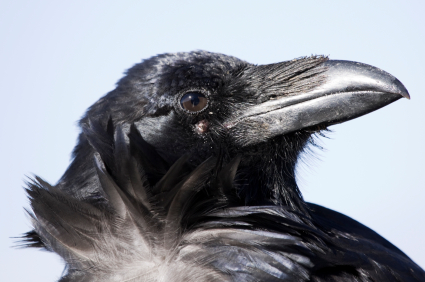
But of all literature’s many birds my favorite is the talking bird with the one-word vocabulary: “Nevermore.”  No bird or word more perfectly sums up the gloomy fact that what is past is past. The raven proclaims with that solitary utterance that there’s futility in mourning what is lost. Still, the brooding, disconsolate narrator of the poem in which the bird appears, grieves endlessly for his passionate, selfless lover, the lost Lenore.  And all the while through long rhyming lamentations, that foul bird perches overhead on the mourner’s chamber door, and will remain there throughout eternity, a winged reminder of our own mortality.

Share and Enjoy:
  • Print
  • Digg
  • Sphinn
  • del.icio.us
  • Facebook
  • Mixx
  • Google Bookmarks

From “The Secret History of Birds.”

Tuesday, May 19th, 2009

By Marc Davis

Two-Fisted Birdwatcher is pleased to publish a third guest essay by Marc Davis. Marc is a prolific writer; a novelist, journalist, and two-fisted observer of all things, including historical events and the players in them, big and small.

Here’s something to consider for The Two-Fisted Birdwatcher: It’s from an imaginary book (which doesn’t exist—yet), that I’ve titled “The Secret History of Birds.”

When Napoleon was defeated by Wellington at Waterloo in 1815, a man named Reuter was on the scene and sent a homing pigeon to Baron Rothschild in London, announcing the British victory.

Rothschild, one of the five brothers of the banking dynasty, proceeded to the London exchange and started selling the Pound Sterling, and shares in British companies.

Nameless and uncelebrated.

Nameless and uncelebrated.

Traders on the floor saw Rothschild dumping everything and assumed that Napoleon had been victorious. But the wily Rothschild knew otherwise. So as the market crashed and fell to near zero prices in the ensuing panic, Rothschild’s agents were secretly buying up the depressed equities and currencies.

When word finally arrived in London via horse and carriage that Napoleon had been beaten, share prices soared and Rothschild made another fortune when he sold everything at a huge profit.

That man named Reuter was the progenitor of the international Thomson Reuters News Service.

Reuter’s bird which brought Rothschild the news remains nameless and uncelebrated. Until now.

Share and Enjoy:
  • Print
  • Digg
  • Sphinn
  • del.icio.us
  • Facebook
  • Mixx
  • Google Bookmarks

Jailbird Seeks Salvation Through Birding

Sunday, May 10th, 2009

By Marc Davis


Two-Fisted Birdwatcher is proud to post its second guest essay by Marc Davis. Marc is a prolific writer; a novelist, journalist, artist and two-fisted observer of all things, including movies that make a point.

When was the last time you saw a two-fisted birdwatcher as the protagonist of a movie? If you said 48 years ago, you’d be right.

The birdwatcher was Burt Lancaster in the 1962 film, “Birdman of Alcatraz,” the almost true story of Robert Stroud, a nasty guy serving life for a murder, who then doubles down with a second homicide of a sadistic screw.

Stroud is a loner, a tough and mean-spirited thug with homicidal impulses who is miraculously transformed when a bird flies into his cell.  What ensues from this chance human-aviary meeting is a profound change in the once incorrigibly combative prisoner.

Alcatraz. The ultimate jailbird cage.

During the course of the 147 minute film – and through the decades in his real life – Stroud becomes an expert ornithologist, studying bird diseases and becoming one of the most knowledgeable of the world’s laymen in this area.

Lancaster handles the birds with an exquisite delicacy, cradling the fragile, trembling little creatures in his massive hands, the same hands with which he stabbed to death the guard who irked him. He feeds them like a loving mother with an eye dropper.  He constructs bird cages with scraps of wood.   He builds a bird hospital in his solitary cell, formulates remedies for common and exotic bird diseases and sells them successfully through an outside partner.

When dealing with birds, Stroud is angelic, but his demonic truculence persists in his dealings with the various wardens who come and go.  Along with his birding, Stroud has written a secret expose of prison abuses.  Warden Karl Malden discovers it and Stroud falls into what seems like an inextricable jam. All of his privileges are withdrawn.

But eventually, as often happens in movies and occasionally in real life, Stroud does something noble, and dangerous, which redeems him with prison authorities – he helps squelch a prison riot. Eventually, he is released from prison after decades of confinement – a two-fisted killer and amateur ornithologist who sought and found salvation in birding.

Share and Enjoy:
  • Print
  • Digg
  • Sphinn
  • del.icio.us
  • Facebook
  • Mixx
  • Google Bookmarks

What the Hell is a Hectare?

Saturday, May 9th, 2009

By Bob Grump


The noted writer of books and articles, Marc Davis, was proud to put his name on our first guest essay, “Crows Await Second Coming.” But the following tirade, our second entry in the Guest Essay category, is written by a guy who gave us a fake name. His essay is pretty good though, so we don’t care if he wants an alias. Enjoy.


Actually, I wanted to entitle this “What the heck is a hectare.” Sounded better. (heck, hectare.) But it’s not two-fisted enough, the word heck. So I went with “What the hell is a hectare.” Which, while not making a word play with hectare, better expressed my feelings about the word “hectare.”

It all started a few years ago. I saw in a birding magazine that the Cornell Lab of Ornithology wanted volunteers to measure shrinking tanager populations. They said they’d specify an area near each volunteer’s home and supply a kit with maps, charts and questionnaires.

ScarletTanager-1

I don’t normally volunteer. But I was interested in tanagers and didn’t like the idea that they were declining. So I signed on. Soon I got my kit in the mail. It told me to claim a section of forest near my home and it described the area I should cover in terms of hectares.

I don’t remember how many. Just “hectares.” As in two hectares or five, like that. Not sure if they meant square hectares. All hectares are automatically square, right? What the hell is a hectare, anyway?

Okay, I don’t live on Mars. I know something about this word. It’s from the metric system that the rest of the world is trying to shove down the throats of Americans. And hectares are composed of something called “ares.” And an “are” (100 of them make a hectare) is a word useful only to crossword puzzle nuts.

Come on: Miles are now also expressed as kilometers. Feet as meters. Good old Fahrenheit temperatures have to appear with parenthetical Celsius numbers, just to confuse things.

Let’s use one system or another, okay? Keep using both and we’ll keep being confused. I ordered a load of logs for our fireplace and would have probably accepted a cord—also an unusual unit—but got a “stere.” What the hell is a stere?

ScarletTanager

Anyway, back to the tanagers and their territories. I set out to begin the study in good faith. But I just couldn’t get a handle on what a hectare was. So I quit. I dropped out.

All I had wanted was for the Cornell people to say: go to  So-and-So Woods, bordered by this road and that road. Hike in, count the tanagers, mail us the information and have a nice day.

Instead I got vague directions about measuring hectares. I mailed the unused kit back to Cornell with my apologies. I assume the tanager study went on. I hope the tanagers are doing well. I still look for them every spring and I see a few.

scarlet_tanager1

They’re in the forest, which is measured in units I’ve heard of: miles, acres, paces. Things like that. But even those American measurements don’t matter. What matters are trees, streams, fields and the tanagers.

Science can take its hectares and put them wherever it wants. They lost a tanager counter because of the metric system. A system that someday I hope our scientists will get out of their system. But don’t count on it.

Share and Enjoy:
  • Print
  • Digg
  • Sphinn
  • del.icio.us
  • Facebook
  • Mixx
  • Google Bookmarks

Crows Await Second Coming

Friday, May 8th, 2009

By Marc Davis

Two-Fisted Birdwatcher is proud to post its first guest essay. This piece was written by Marc Davis, a novelist, journalist, artist and two-fisted observer of all things, including crows.


We often drove that 100-mile straightaway from Clovis to Rosewell in little more than an hour.  There was nothing along the road – no houses, no telephone poles, hardly a tumble weed or a mesquite bush, no stoplights, and only a few intersections where the farm-to-market roads met the highway.   The land was flat, barren, the color of sand.  Even the Spanish name for it was harsh, with hard, ugly consonants: caliche.

I just gunned it, foot to the floor, straight ahead with  no distractions. The road was hypnotic in its featureless, two-lane monotony, with seldom a car coming at us in the other direction.  When a car did loom far down the road, the air between us shimmering like waves of heat off a charcoal grill, it was only for a few moments.  Then the car flashed by with a rush of air, buffeting my car for an instant away from it like momentary turbulence in flight, and it was gone, way down the road far away in the rear view mirror.

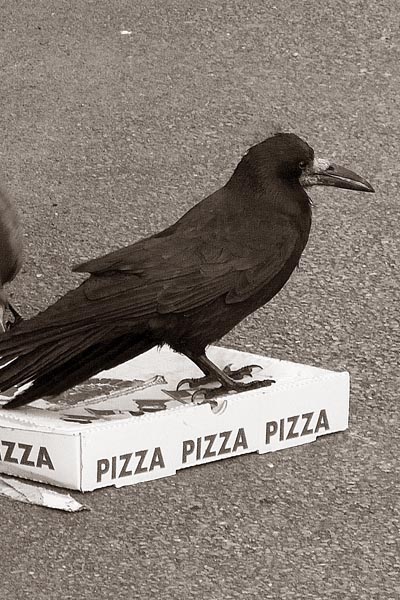
Back about thirty years ago I was driving that road en route to El Paso when about half way toward Rosewell I saw a cluster of black spots looming on the road shoulder to my right.  In a few seconds as I approached, drew alongside it, and passed, I saw it was a group of crows or ravens, pecking at what looked like a slice of pizza that some traveler must have thrown from the window.

...an amazing delicacy

...an amazing delicacy

What an amazing delicacy, they must’ve thought, what an astonishingly delicious meal.  They must’ve told one another that they’ve never had anything like this in all their years of scavenging whatever food they could find in this desolate fraction of the world.  If these birds can think, they must’ve thought it divine.

They spread the word to their family and friends, and those crows or ravens told others and they told others still, of the incredible delight of that strange, new, never-before-seen-or-tasted dish that gave those who ate it so much pleasure.

Wanting more of that indescribable gourmet delight, the birds gathered every day at the same location along the road, hoping, wanting, even praying in their aviary manner, that some traveler would toss another triangle of that heavenly food from one of those objects that sped by every so often.  They waited.  And waited.  And to this day, three decades later, they may still be waiting.  But their faith is unwavering.

None of that original group is now alive who tasted of that long-ago wonderment, and spread the news of its heavenly flavor.  But the story of that miracle has come down, generation after generation, and now along that straightaway from Clovis to Roswell, the crows and ravens still congregate, awaiting a second helping, a second coming of that divine provender.  People I know who have driven that stretch, have told me that they see these same spots of black at that point in the road where the pizza first appeared, as if out of nowhere.  Knowing as I do, that human nature and animal nature are alike in so many respects, the birds will eventually tire of waiting.  But not yet.

Share and Enjoy:
  • Print
  • Digg
  • Sphinn
  • del.icio.us
  • Facebook
  • Mixx
  • Google Bookmarks